In short: A freelance web developer is a self-employed specialist who plans, designs, builds and launches websites for clients, and often looks after them afterwards. You deal with the same person throughout. A freelancer suits small businesses that want a professional site, direct communication and flexibility, but may not suit very large projects needing a whole team at once.
“Freelance web developer” is one of those job titles that can mean a lot of different things. Some freelancers only write code for agencies. Others, like me, work directly with small businesses and handle everything from the first conversation to the training session after launch.
I’m a freelance web designer and developer based in Enfield, North London, and here’s what the job actually involves, based on how I work day to day.
What is a freelance web developer?
A freelance web developer is someone who builds websites on a self-employed basis rather than as an employee of an agency or company. They take on projects for a range of clients and usually set their own processes and prices.
The term “developer” technically refers to building the working site with code. In practice, many freelancers also do the design, the SEO set-up and ongoing support. If you’re unsure where the line falls, my post on web designer vs web developer explains the difference.
What a freelance web developer actually does
Here’s the work that goes into a typical small business website, in roughly the order it happens.
1. Understanding your business
Before any design or code, I need to know what you do, who your customers are, which areas you cover and what you want visitors to do. Usually that’s a phone call or enquiry. This first chat is free, and it’s where I’ll tell you honestly if I’m not the right fit.
2. Planning and quoting
Next comes working out which pages you need, what features matter (a contact form, a gallery, an online shop) and which platform suits you. Then I put together a quote. My packages are paid in three stages, so you’re never paying everything upfront.
3. Designing a mockup
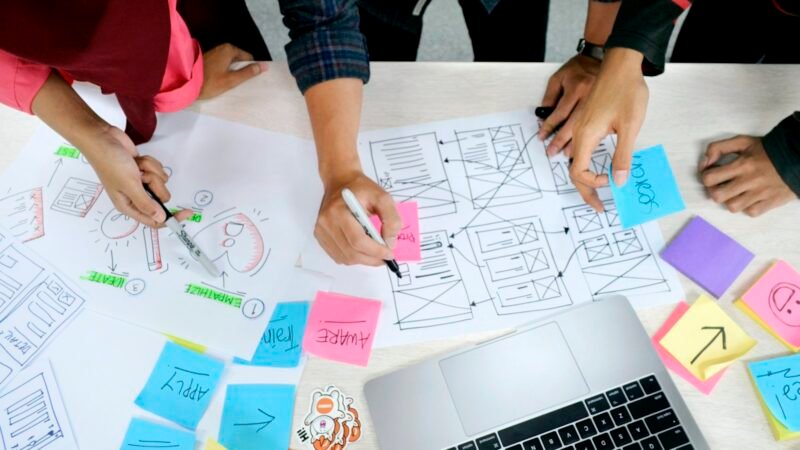
I create a mockup: a visual draft of how the site will look. This is where you see layout, colours and style before anything is built. You get three rounds of revisions to get it right.
4. Building the site
Once you approve the design, I build it. For most service businesses that’s on WordPress, and for online shops it’s Shopify. The build covers:
- A custom design, without heavy page builders slowing it down.
- A layout that works on phones, tablets and desktops.
- Contact forms, maps and any integrations you need. My Google integrations page covers things like Maps and Analytics.
- SEO basics: page titles, descriptions, structured data and a sitemap.
- Image compression and caching to keep pages quick.
5. Testing and launch
Before going live, I check the site on different devices and browsers, test forms, check links and make sure everything loads properly. Then it goes live on your domain.
6. Training and handover
After launch, I run a one-hour training session so you can edit your own pages, swap photos and add new content without needing to call me.
7. Ongoing care (optional)
Websites need looking after. My optional monthly hosting and care plan covers hosting, security updates, backups and support, and you can cancel with notice. Some clients prefer to manage this themselves, and that’s fine too.
The skills a freelance web developer brings
Because a freelancer handles the whole project, they need a broad mix of skills:
- Design sense: layout, typography, colour and usability.
- Technical skills: HTML, CSS, JavaScript, PHP and platforms like WordPress and Shopify.
- SEO knowledge: how to structure a site so search engines understand it.
- Performance: making sites load quickly. Have a look at my guide to why website speed matters.
- Communication: explaining technical things in plain English and keeping you updated.
- Project management: keeping things moving without an account manager in the middle.
Freelancer, agency or DIY?
A freelance web developer is one of three common routes. Here’s how they compare in general terms:
| Freelancer | Agency | DIY | |
|---|---|---|---|
| Who you deal with | The person doing the work | Usually an account manager | Yourself |
| Typical cost | Moderate | Higher | Lowest upfront |
| Flexibility | High | Varies | Total, but limited by skill |
| Capacity | One person | A whole team | Your spare time |
| Best for | Small and medium business sites | Large or complex projects | Simple sites on a tight budget |
I’ve written a fuller comparison in freelance web designer vs agency.
When a freelancer is the right choice
From my experience, working with a freelancer tends to suit you if:
- You’re a small business, sole trader or local service.
- You want to talk directly to the person building your site.
- You’d like a custom site without agency overheads.
- You value flexibility and a personal approach.
- You want someone who’ll still be around to help after launch.
When a freelancer might not be right
To be fair, there are times a freelancer isn’t the best fit:
- Very large projects needing designers, developers, copywriters and marketers all working at once.
- Tight deadlines on big builds where one person simply can’t work fast enough.
- Complex software such as bespoke apps with heavy custom back-end work, unless the freelancer specialises in it.
- You need cover around the clock. A single person can’t offer the same availability as a larger support team.
If your project is small enough for one person but you’re worried about availability, ask about support arrangements before you start.
How to find a good freelance web developer
A few things I’d look for:
- A portfolio of real, live sites you can click through. You can see mine on my portfolio page.
- A clear process so you know what happens and when.
- Plain-English communication. If you can’t understand them now, it won’t get easier.
- Clarity on who owns the site and what happens if you part ways.
- Honesty about what they don’t do.
My guide on how to hire a freelance web developer goes into this in more detail.
Frequently asked questions
What does a freelance web developer do day to day?
It varies, but typically a mix of talking to clients, designing mockups, building and testing sites, and making updates for existing clients. There’s also admin, such as quoting and invoicing, because a freelancer runs their own business.
Is it cheaper to hire a freelance web developer than an agency?
Often, yes, because a freelancer doesn’t carry the overheads of offices, sales teams and account managers. Prices still vary widely across the market, so compare what’s included rather than just the headline figure. My packages start from £400.
Can a freelance web developer also do web design?
Many can. Lots of freelancers, including me, design and build the site, so you’re dealing with one person throughout. It’s worth checking their portfolio to see whether their design style suits you.
Will a freelance web developer maintain my website after launch?
Many offer ongoing care, such as hosting, updates, backups and small changes. Ask what’s included and whether it’s optional. I offer a monthly hosting and care plan, but you’re free to look after the site yourself.
How do I know if a freelance web developer is any good?
Look at live sites they’ve built, check they load quickly on your phone, and ask past clients if possible. A good freelancer will explain their process clearly and won’t promise things like guaranteed Google rankings.
Do I need a local freelance web developer?
Not necessarily, as most work can be done remotely. Some people prefer someone local who understands their area and can meet in person. I work with businesses across North London and the rest of the UK.
Thinking of working with a freelancer?
If you’d like to find out whether working with me suits your business, start with a free chat. You can read more about me, or get in touch and tell me what you have in mind.